The 8th of May was wonderfully sunny, albeit a little cool, perfect weather for getting out and about and enjoying some vigorous activity, which is exactly what Sue and I did. While Sue met up with our former neighbour, Viv, for a cycle ride down the disused Lamport railway line, followed by lunch at the café at Waterloo Lakes, I drove to the Queen’s Head in the picturesque village of Bulwick. The name Bulwick means ‘bull’ or ‘bullock farm’.
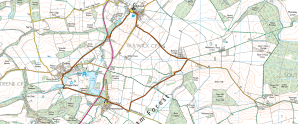
John was already parked up when I arrived a few minutes before ten and, after powering up my GPS, we set off on what proved to be a fascinating ramble. The first part of our route took us alongside the meandering Willow Brook and past a series of grassy terraces on the hillside, once the sites of medieval thatched dwellings and now merely faint imprints upon the landscape. Ever the fisherman, John paused for a while by a small bridge to fruitlessly search for signs of fish before we moved on to cross the very busy A43.
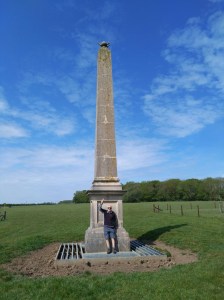
Immediately afterwards, we traversed a stretch of marshy ground which we guessed had once formed a small lake but had long since silted up. The ground then began to rise towards a striking obelisk which, upon closer inspection, sported the curious addition of a teapot perched upon its summit. Later research revealed that we had been walking through the Brudenell Estate, which was acquired in 1514 by Sir Robert Brudenell, later Chief Justice of the Court of Common Pleas. The estate has descended through the male line to the present-day Brudenells, who continued to pay an annual rent of £18 until 1970, when the property was enfranchised from the Church Commissioners for eleven years’ worth of rent, the princely sum of £198. The obelisk itself was erected to commemorate the lives of the current owner’s parents for the millennium. The teapot was suggested by Sir Timothy Clifford, as Edmund Brudenell was said to have always enjoyed “a jolly good cuppa”.
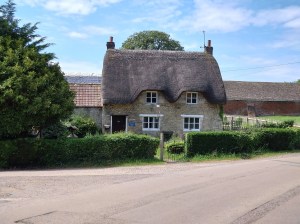
After taking a few photographs, we continued into the tiny hamlet of Deene. The village is best known for historic Deene Park, a country house and estate that has remained in the Brudenell family for more than 500 years. The village itself also contains several historic buildings, including a 17th-century manor house, a 14th-century church and a lovely thatched blacksmith’s forge, now converted into a private residence.
Continuing through the grounds of Deene Park, we crossed the lake by way of a bridge and chatted to a couple in a Land Rover who were preparing the route for a half-marathon due to take place the following weekend. Realising that our ramble was proving far too leisurely if we were to make our reserved lunch at the 16th-century coaching inn, the Queen’s Head, booked for 12.30 pm, we increased the pace, only to be slowed again as we traversed another silted lake. This one, however, was considerably wetter and required careful manoeuvring across terrain that threatened to suck the boots from our feet.
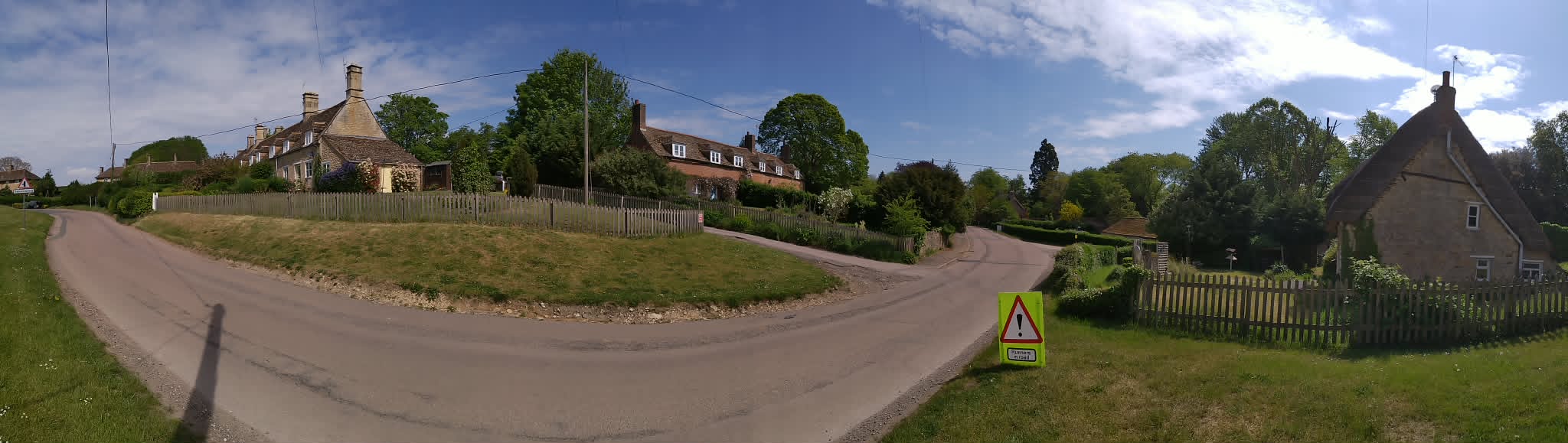
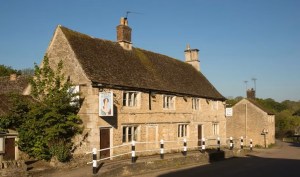
Crossing the A43 once more, we made good progress, passing through the rather exclusive hamlet of Deenethorpe before leaving Benefield Road and cutting through fields to eventually regain the lane leading back into Bulwick. There, we enjoyed a sumptuous lunch, washed down with a couple of much-needed refreshments to quench our raging thirst. Altogether, it was an excellent six-mile ramble in near-perfect conditions.
That evening, Charlotte was dropped off at Willow Bank to spend some time with her parents while Suraj continued to Leicester University to collect Lucas, who had completed his end-of-term examinations and was returning home for a three-month summer break. After collecting Charlotte, the family detoured via an Indian restaurant in town to pick up a takeaway before returning home to Rothwell.
On the afternoon of the 12th of May, I travelled to Leicester General Hospital for the much-anticipated results of my biopsy. I was ushered into the consultation room 15 minutes early and informed that my prostate cancer had been graded as Gleason score 6, the lowest grade of prostate cancer, and that it had not spread.
This rating means the cancer is considered to be a low- or very low-risk disease, classified as Group 1. Most tumours of this type are detected during routine prostate cancer screening. Gleason 6 prostate tumours generally grow slowly and may never cause any problems, or even require treatment. Nevertheless, they must be carefully monitored, and I will now undergo a blood test every four months, together with an annual MRI scan.
It was not the ideal outcome, but from the expressions on their faces, it was clearly a far better diagnosis than that received by some of the other patients waiting in the clinic with me. I came away with a comprehensive pack of literature, together with detailed instructions regarding future monitoring.
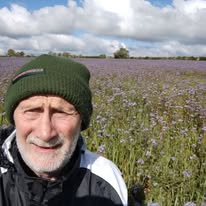
A lovely field of flowers spotted on my morning ride.
The following day, after a morning shopping trip to Corby and catching a film in the afternoon, Sue drove to Newbold Verdon with Charlotte to meet up with Sarah and Jamie for a light meal before travelling on to Ashby-de-la-Zouch. They were attending a Psychic Evening held at a café in the town centre. It is an interest of theirs which I do not share, though I regard it as harmless fun, and I listened with fascination to tales of who had purportedly turned up from the other side, although on this occasion there was little to report.
Back in Harborough, I experienced celestial awakenings of my own as two thunderstorms passed over the town, one of which left the lawns white with hailstones.
Sue’s friend, Susan, was transferred from Kettering Hospital to a care home on the outskirts of Lutterworth during the morning of the 15th of May. While this was taking place, Sue visited her home in Harborough to collect clothes that would be more suitable for her new surroundings, before driving on in the afternoon to visit her friend.
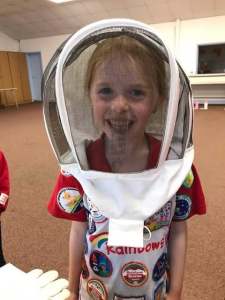
Alice gets her Bee Keeping Badge at Rainbows.
On arrival, Susan was finishing her lunch with the other residents and, together, they familiarised themselves with the layout of the building. Sadly, Susan’s dementia appears to be worsening rapidly, and she remains under the illusion that she will be there for only one night before returning home. After their excursion, they sat with the other residents in the common room to watch a very accomplished singer perform, before Sue returned to Willow Bank in time for tea.
I find it equally sad that ordinary people continue to run marathons, hold fêtes, donate their savings and undertake a million other activities to raise money for research into a cure for a condition that gradually takes away a person’s abilities, personality and independence. It reshapes the lives of entire families and circles of friends, making relationships emotionally exhausting during the process of a “long goodbye”, in which the person remains physically present while being slowly altered by the illness.
Meanwhile, the billionaires of this world, those who could truly make a difference and perhaps, in the process, help themselves by leaving a legacy that history would record with kindness, seem instead to focus upon the ever-increasing digits in their bank accounts, at the expense of what appears to be an undoubted loss of soul. Shame on them. And as for the USA, it is no longer has a democracy, but should be better described as a hypocrisy.
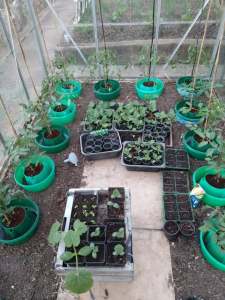
On checking my allotment, I discovered with dismay that the hailstorm a few days earlier had wreaked havoc upon the sweetcorn and potatoes I had so lovingly sown and transplanted over the previous weeks. The potatoes will recover, but I have had to resow the sweetcorn and can only hope that, with the warmth and protection of the greenhouse, they will catch up with the season.
On Saturday (16th), Charlotte jetted off to Spain for a second visit to her friend, who had recently swapped the cold of the UK for the sun and warmth of the continent. This time, she and another friend accompanied the émigré’s mother for a four-day sojourn before returning home.
On the same day, I entertained Sean in the Garden Room, where we watched Leicester Tigers convincingly defeat Sale, followed by the England women putting the French side to the guillotine in equally emphatic fashion.
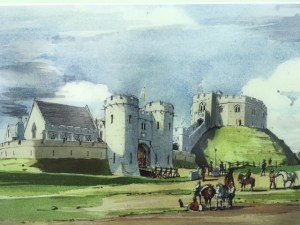
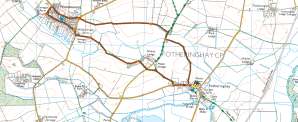
On a day forecast to bring heavy showers throughout, I set off beneath a leaden sky to meet John Lee for another ramble, this time from Fotheringhay. Noted as the site of Fotheringhay Castle, which was razed in 1627, it was here that Richard III was born in 1452 and where Mary, Queen of Scots, was tried and beheaded in 1587. The first written mention of a settlement dates from 1060, while the Domesday Book of 1086 records the site as ‘Fodringeia’. Years ago, John and I had launched a canoe into the River Nene beside the derelict castle and enjoyed a paddle down to the village of Elton, but today we were on foot and heading in the opposite direction towards the pretty village of Woodnewton.
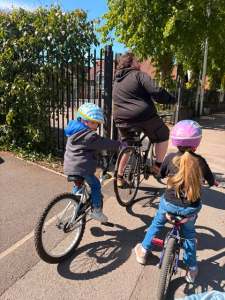
Lee, Archie and Alice go for a ride.
We met in the car park of the 18th-century Falcon Inn, pulled on our boots beneath an encouragingly brighter sky, powered up my GPS and set off on what proved to be a straightforward and well-trodden route. Having followed part of the Willow Brook on our ramble last week, we were surprised to encounter the lovely watercourse once again as we left the village. A couple of fellow hikers, marching in the opposite direction, informed us that its clear-running waters contained trout, much to the delight of John, whose passion for fly-fishing was immediately stirred. As usual, much of the passing scenery went unnoticed while we discussed the world’s problems, the weekend’s rugby and family news. Mindful that the previous week we had lingered far too long in conversation and spent too much time admiring the views, forcing us to quicken our pace to reach our lunch venue before the kitchen closed, we maintained a steadier rhythm this time.
En route, we passed quite a few dog walkers, a testament to the popularity of the path we had chosen. Naturally, I still found enough time to fondle a few canine ears and engage their owners in a little doggy banter. John, never quite the dog lover that I am, stood back with a wistful expression, politely rejecting the friendly nudges encouraging further fuss.
On reaching Woodnewton, our circular route through the village took us past the closed White Swan. Originally intended as both our meeting place and lunch venue, we had made a late change of plan after I discovered they did not open on Mondays and Tuesdays. The return route across open fields picked up part of the Nene Way before leading us back towards the outskirts of Fotheringhay by way of a farm track and country lane. It was at their junction that we came across a poignant memorial to a tragic wartime event.
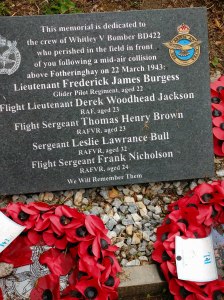
On 22 March 1943, two Armstrong Whitworth Whitley V bombers from 296 Squadron, based at RAF Hurn in Dorset, were returning from a routine training flight when they collided mid-air in turbulence over a field near Fotheringhay. All five men aboard one aircraft lost their lives. The second aircraft, piloted by Flying Officer Robert Tope Hamer, was badly damaged, yet he somehow managed to land it on one wheel at Polebrook. Tragically, F/O Hamer himself was killed just five months later when his aircraft was mistakenly shot down by US Navy anti-aircraft fire during the Allied invasion of Sicily.
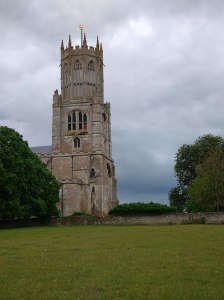
We arrived back at the Falcon Inn at 11.30 am and, on quizzing the chef busy in the kitchen, learned that food was not served until noon. Undeterred, we changed our boots and set off to explore the nearby Church of St Mary and All Saints, whose distinctive tall tower dominates the surrounding skyline. This magnificent 15th-century church was begun by Edward III, who also built a college in cloister form along the church’s southern side. A light drizzle accompanied us as we walked up the impressive avenue of mature trees leading to the entrance, where we discovered a walker and his dog, one whose ears I had already fondled earlier in Woodnewton, sheltering in the foyer. After another lengthy fuss over the dog, we entered the church itself.
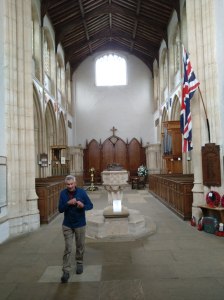
I was deeply impressed. Much shorter in length than I had imagined from the outside, the church nevertheless possessed a vaulted roof of such height that it rivalled many a great cathedral. Decoration was minimal, yet it perfectly reflected the rich history of the village and castle, with artefacts displayed in glass cases and information boards thoughtfully arranged along one wall. Half an hour was nowhere near long enough to do justice to this museum-like ecclesiastical treasure, but our bellies were rumbling and, after all, the rain had stopped.
The Falcon Inn proved delightful. We shared the establishment with a large Spanish family from Bilbao, who no doubt enjoyed their meal as much as we enjoyed ours. It was a splendid way to finish a ramble on a day when the weathermen had confidently predicted that we would be thoroughly soaked.
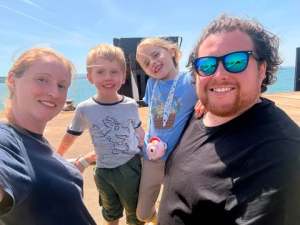
A visit to the beach before catching the ferry.
On the 21st, I met Sarah and her family in a lay-by off the M1 near Lutterworth to collect Mia. The family were off on a trip to France during the school half-term, while the grandparents had the pleasure of looking after their dog, along with a couple of trays of plants from their greenhouse. They were catching a ferry from Poole to the continent and had booked a hotel in the town for the evening in readiness for the following morning’s crossing.
Earlier that morning, we had also taken charge of Nala, as Jamie was needed by MeatLink to make a few deliveries while one of the firm’s drivers was on holiday. The two dogs get on very well together and provide good company for one another. Jamie collected Nala later that evening while I was entertaining a few chums in the Garden Room with a game of pool.
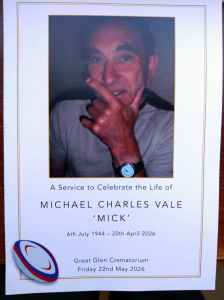
The following day, I was collected by Jeremy Brown and his wife to attend the funeral of Mick Vale. Michael Charles Vale had been a good friend, a much-respected fellow rugby player, and a devoted clubman. Sadly, at the age of 82 and suffering from Alzheimer’s disease, he passed away on the 20th of April. Many of his rugby chums and fellow club members attended the service before moving on to the wake at the rugby club. On this occasion, however, I returned home after saying my goodbyes at the crematorium.
As the temperature began to soar, the watering can came into frequent use, and Mia’s walks became shorter and shorter as she struggled in the heat, alternating brief bursts of energy with lengthy lie-downs in the nearest shade.
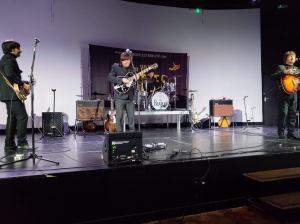
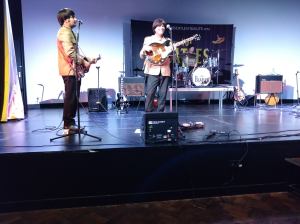
On the evening of the 23rd, Sue and I wandered down to the Octagonal Hall in Welland Park to enjoy The Vox Beatles, an excellent tribute band who played a set that the mainly elderly audience knew by heart. Not being used to belting out songs, it was not long before my dulcet tones deteriorated into a croak and eventually a squeak. Hey Jude!
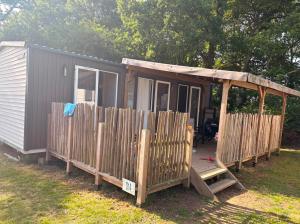
Sarah and the family’s Eurocamp accommodation.
Dressed in shorts and a T-shirt for what I expected to be a hot and stuffy concert hall, I was undone by an arctically efficient air-conditioning unit, which prompted vigorous foot-tapping and plenty of body swaying in an effort to keep warm. Thankfully, nobody appeared to notice the shivers and increasingly blue hue of my skin. It was a great night of nostalgia for everyone. Sue had seen the originals in the 1960s at Tenbury Wells, whereas I had little interest in music until the 1970s, when I became a devotee of rock.
The following morning, Sue attended a very busy Saddington car boot sale, returning early after wilting in the heat. Mia and I paid a visit to Welland Park while the family Parkrun was in full swing and stalls and amusements were being set up for Harborough’s Wild West and Country Fair. Sue visited the fair during the afternoon, but once again the heat curtailed any lengthy perusal.
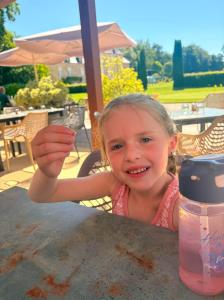
Alice loses a tooth.
On the hottest day of the year so far, I rose early, watered the garden and then the allotment. The plan was to play golf with Suraj, Lucas and Ellis while Sue and Mia kept Charlotte company in Rothwell. However, yesterday evening, Suraj travelled to Coventry, as his sister Nina, in a very confused state, rang for help. On arrival, an ambulance was called, and she was admitted to the hospital with a suspected stroke. He remained with her overnight and throughout the following day. Needless to say, golf was cancelled.
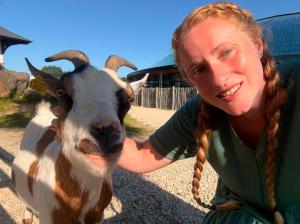
Sarah meets the local French.
After a few phone calls, it was decided that Sue and I would drive to Rothwell to have lunch with Charlotte and the boys. The heat of the day was fierce, so lunch was taken indoors, away from the furnace outside. Replete after the meal, the boys retired to the sanctuary of their bedrooms, Sue and Charlotte played Rummikub in the kitchen, and I took Mia for a short walk, during which she took every available opportunity to splash about in the brook that runs alongside the house.
On our return, the game had been completed, so we sat in the shade in the garden with drinks and ice cream, during which we learned that, following a scan, Nina had been diagnosed with a mass on the brain and would not be leaving the hospital any time soon. Suraj remained by her side throughout until late on Monday night.
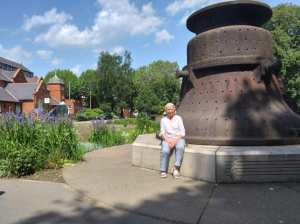
The cast for Great Paul.
Global warming really showed its teeth as the UK recorded its hottest ever May day, with temperatures reaching 34.8°C. Remarkably, the record was broken again the following day when 35.1°C was recorded at Kew Gardens in London.
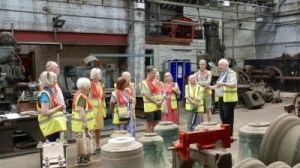
Sue sweltered on a U3A trip to the UK’s last remaining bell foundry, John Taylor & Company Ltd. In 1839, the Taylors established themselves in Loughborough, casting a new ring of bells for the parish church. The work was so well received that orders flooded in and, by 1859, the business had expanded into the world’s largest purpose-built bell foundry. It was here that the largest bell hanging in St Paul’s Cathedral was cast. Housed in the south-west tower, Great Paul is the largest bell currently in use in the UK, weighing an incredible 16.75 imperial tons. It was cast by John Taylor & Co. in 1881 and is tuned to E flat.
Sue was collected from the end of our driveway at 9 a.m. for the journey to Loughborough. After a conducted tour of the works, she had lunch before returning to Harborough, hot and exhausted by the heat.
Mia and I had a gentle day, our only exertion being a leisurely walk into town to have the battery in my watch replaced.
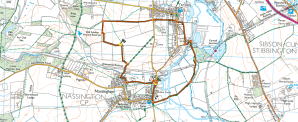 By Friday (29th), the extreme heat had subsided to a more manageable mid-20s°C, just right for another ramble with John. This time, it was a 50-minute drive to the 17th-century village inn, the Queens Head, in the quaint Northamptonshire village of Nassington, for a gentle five-mile amble taking in the River Nene. The village has existed since at least Anglo-Saxon times; records show that an Anglo-Saxon hall there was taken over by the Viking king, Cnut the Great, and used as one of his royal residences.
We were disappointed to find ourselves sharing the car park with a large group of hikers, which did not bode well for a speedy lunch on our return. By the time we had pulled on our boots, they had departed, thankfully on a different route from our own, and we did not encounter them again until we returned. Annoyingly, having boxed up some promised vegetable plants the previous evening and placed them in the greenhouse ready to give to John the following morning, I discovered that I had left them behind. Such is life at this age: the slightest distraction and something gets forgotten. Hopefully, the handover will take place on our next ramble.
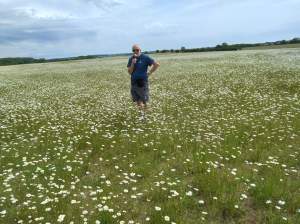
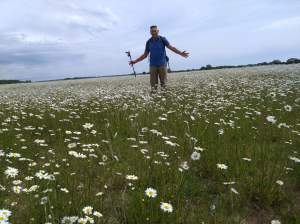 Then I made another silly mistake at the start of our adventure. We began the route plotted on my GPS in reverse and, although I spotted the error after about 100 metres, I decided to carry on, foolishly forgetting that the only other time I had done this it caused the little machine to protest, leading to much confusion and several retraced steps. Nevertheless, beneath a gradually clearing sky, we made good, unhindered progress. The conversation, like the scenery, was varied and interesting until, about two-thirds of the way round, we were hit by a double whammy: a GPS misdirection and a brief shower. This prompted the rapid donning of rain gear and considerable head-scratching. It took John’s recognition of a trail we had already walked some ten minutes earlier before we arrived at a solution that put us back on the correct path and allowed the rain gear to be shed once more.
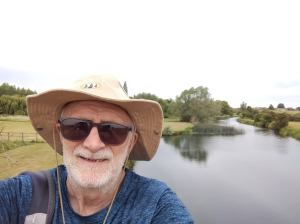
 Passing through Yarwell Mill Country Park, beside the River Nene and surrounded by the gentle rolling Northamptonshire countryside, caused us to pause while I ferreted out a stone that had become lodged in my boot and checked the rushing waters for signs of fish before we marched on beneath a now cloudless blue sky towards lunch.
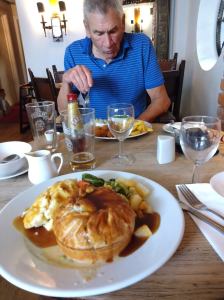
We had beaten some of our fellow hikers back, although they were already seated on the patio enjoying refreshments when we arrived. However, upon ordering our own sustenance, it became clear that, like most well-organised groups, they had pre-ordered their meals before setting out and that our freshly ordered repast would therefore be delayed. No matter. The beer was excellent, the atmosphere perfect, and we had yet to put the world to rights. When the food finally arrived, John’s scampi was well presented and looked decidedly healthy, while my pie was enormous and accompanied by a generous helping of vegetables. A very good meal.
Later that evening, Sue and I walked into town to watch No Ordinary Heist at Harborough Theatre. Inspired by the real-life 2004 Northern Bank robbery, the film follows two estranged bank employees who are coerced into carrying out the largest heist in Irish history after criminals kidnap their families and threaten to kill them. I can thoroughly recommend it; an absorbing and gripping film from start to finish.
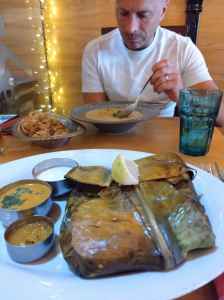 On the last day of May, Sarah and her family returned from a very active holiday in France, and before attending the clash between Tigers and Exeter Chiefs, I travelled to Leicester by train to meet Jamie at Kayal, the Goan restaurant. He arrived early and had already ordered me a very nice Indian beer in readiness for my arrival, a good sign that Sue and I had brought him up the right way.
The restaurant is a favourite haunt of Tigers supporters on match days, and it soon filled with fans sporting Tigers colours from down the years on their backs. After the expected excellent meal, a seafood biryani in my case, I briefly called into the restaurant’s vegan sister establishment, situated just across the road. During our recent ramble, John had mentioned that he, too, would be attending the game and would be having lunch there with his wife and another couple. Following a quick exchange of pleasantries, Jamie and I joined the throng making its way to Welford Road, stopping for refreshments at a pub on Newark Walk before taking our elevated seats in the North Stand.
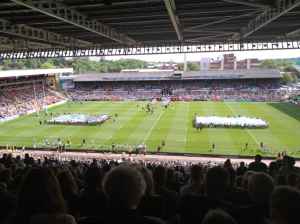 With the Tigers needing a win to secure a home Premiership semi-final, they produced a lacklustre performance that saw them deservedly trailing for much of the match. Although they briefly took the lead, it was soon squandered in the closing stages as Exeter ran out worthy winners, 35–26.
After leaving Jamie outside the ground to catch his train home, I noticed via a location app that Sue had set off to meet Sarah and her family at the lay-by near Lutterworth to hand over Mia. Their journey home had been disrupted first by a delayed ferry departure and then by an accident on the motorway, which resulted in the road being closed. It was late, and they were all very tired by the time they finally reached Newbold Verdon and their beds.


Leave a Reply